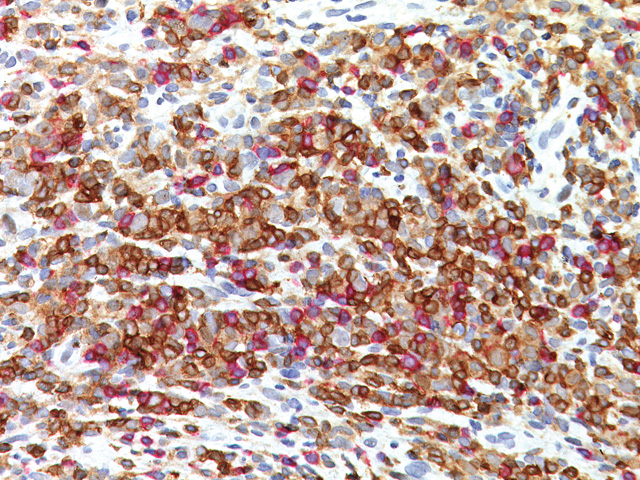
CD4, a T-cell subset found in thymocytes and peripheral blood lymphocytes, is expressed in the majority of T-cell lymphomas. CD8 is a T-cell subset found in cortical thymocytes, T-cells and NK cells. The CD4:CD8 ratio may be helpful in distinguishing mycosis fungoides from its inflammatory mimics or as an aid in determining clinical outcome in […]
CD4 antibody is expressed in a subset of T-cells and has been reported to be found in approximately 80% of thymocytes and in 45% of peripheral blood lymphocytes. CD4 is expressed in the majority of T-cell lymphomas, including mycosis fungoides. Multiple studies have concluded that CD4+CD25+ regulatory T cells possess immunosuppressive activity and are commonly […]
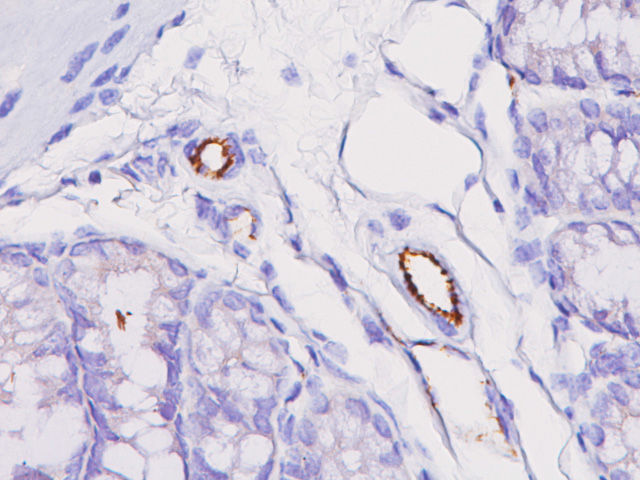
CD34 antibody antigen is selectively expressed in human lymphoid and myeloid hematopoietic progenitor cells. Studies have shown the CD34 antibody also reacts with vascular endothelial cells in normal tissues and in benign and malignant proliferations. The utility of CD34 is in the study of benign and malignant vascular tumors as well as characterization of acute […]
CD31 Rat Monoclonal Antibody (PECAM-1) mediates cell-to-cell adhesion and supports the idea that it may be involved in some of the interactive events taking place during thrombosis, wound healing, and angiogenesis. Studies have shown CD31 is of value in the study of benign and malignant vascular tumors. Reliable identification of endothelial cells is a prerequisite […]
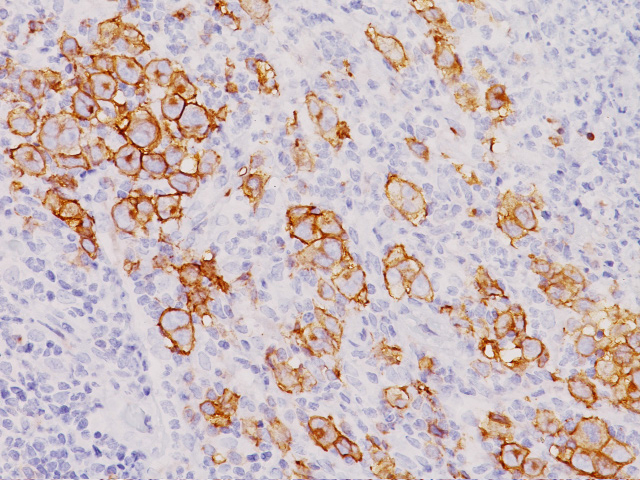
CD30 Ki-1 antibody is expressed in mononuclear Hodgkin’s and multinucleated Reed-Sternberg cells in Hodgkin’s disease, in tumor cells of a majority of anaplastic large cell lymphomas, in a varying proportion of activated T and B cells, and by embryonal carcinomas. It aids in distinguishing large cell lymphomas derived from activated lymphoid cells, from histiocytic malignancies […]
CD30 cocktail antibody is expressed in mononuclear Hodgkin’s and multinucleated Reed-Sternberg cells in Hodgkin’s disease, in tumor cells of a majority of anaplastic large cell lymphomas, in a varying proportion of activated T and B cells and by embryonal carcinomas. It aids in distinguishing large cell lymphomas derived from activated lymphoid cells, from histiocytic malignancies […]
The CD30 antigen, initially designated Ki-1, recognizes a single chain transmembrane glycoprotein that has been demonstrated to be homologous to members of the nerve growth factor receptor superfamily. The mature 120 kDa molecule is formed from 90 kDa precursor molecules processed in the Golgi system.16 The Ki-1 (CD30) antigen is expressed in mononuclear Hodgkin’s and […]
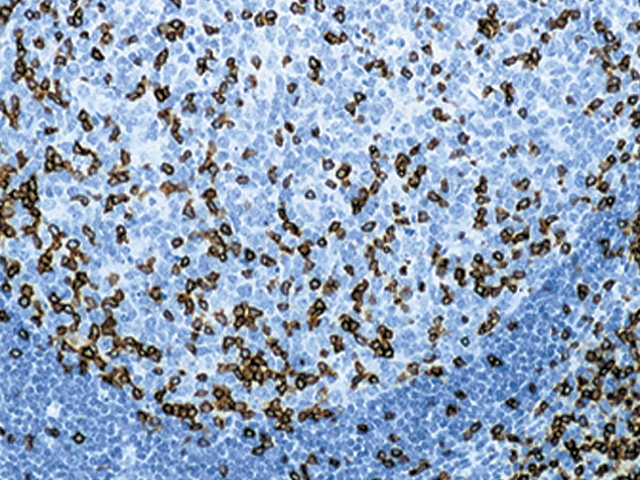
Monoclonal antibody to human CD3, when used in conjunction with other antibodies, is regarded as a reliable pan T-cell antibody used in the immunophenotyping of lymphomas in paraffin sections. Most T-cell lymphomas show positivity for CD3. Notable exceptions include some of the more aggressive large T-cell lymphomas and anaplastic large cell (Ki-1, CD30) lymphomas, which […]
This rabbit monoclonal antibody reacts with the intracytoplasmic portion of the CD3 antigen expressed by T-cells. It stains human T-cells in both the cortex and medulla of the thymus and in peripheral lymphoid tissues. It does not react with B-cells, monocytes, granulocytes and platelets. CD3 is regarded as a reliable pan T-cell antibody used in […]
CD3 antibody (P) reacts with the intracytoplasmic portion of the CD3 antigen expressed by T cells. Studies have shown that CD3 stains human T-cells in both the cortex and medulla of the thymus and in peripheral lymphoid tissues. CD3 is regarded as a reliable pan T-cell antibody used in the immunophenotyping of T-cell lymphomas in […]