Protein Gene Product 9.5 (PGP9.5) is also known as ubiquitin C-terminal hydrolase 1 (UCHL-1). Expression of PGP9.5 is highly specific to neurons and to cells of the diffuse neuroendocrine system and their tumors. It is estimated that PGP9.5 antibody comprises 1-2% of total soluble proteins in the brain. Immunohistochemistry of routinely processed neuronal tissues has […]
Pan Lymphoma Cocktail (LCA + CD20 + CD3 + CD43) are specific leukocyte markers used in the identification and assessment of lymphoid neoplasms. This combination of antibodies offers a marker for the identification of a variety of leukocytes. CD45 also known as leucocyte common antigen (LCA), is expressed on hematopoietic cell lines, but absent on […]
Oct-3/4 [SEMGC] is a mouse monoclonal antibody that has been reported as a superb nuclear marker of classical seminoma and embryonal carcinoma. Oct-3/4 antibody has excellent sensitivity and specificity for these two tumors and can be effectively used as an aid to screen for these neoplasms when dealing with a metastatic tumor of unknown origin. […]
Neurofilaments antibody are the intermediate filaments of neurons. Studies have shown this antibody stains the 70 kDa and 200 kDa polypeptides of neurofilaments. It stains neurons in tissue sections of brain and other tissues. It does not cross-react with other intermediate filaments such as GFAP, keratin, vimentin and desmin and does not react with small […]
Multiple myeloma oncogene-1 (MUM-1) is a 50 kDa protein encoded by the MUM-1 gene. Studies have shown IRF4 / MUM-1 is expressed in the nuclei and cytoplasm of plasma cells and a small percentage of germinal center (GC) B cells located in the “light zone”. This antibody labels MUM-1 protein in centrocytes and their progeny, […]
MUC-1 is a large cell surface mucin glycoprotein expressed by most glandular and ductal epithelial cells and some hematopoietic cell lineages. MUC-1 is secreted from tumor cells. MUC-1 antibody stains cell membranes, but also the cytoplasm of most epithelial cell types. It is expressed abundantly in lactating mammary glands and over-expressed in >90% breast carcinomas […]
Microphthalmia Transcription Factor antibody (MiTF) is a nuclear melanocytic marker. Studies have shown it is a sensitive and specific marker for malignant melanoma, including some spindle-cell variants. MiTF has been shown to have superior sensitivity and specificity to S100 and HMB45. MiTF may be useful for identification of melanoma, melanocytic soft tissue tumors and the […]
The HMB45 clone reacts with a neuraminidase-sensitive oligosaccharide side chain of a glycoconjugate present in immature melanosomes. The HMB45-reactive antigen is present in cutaneous melanocytes, prenatal and infantile retinal pigment epithelium and melanoma cells. It is also thought to be oncofetal in nature. This antibody has been shown to label the majority of melanomas. The […]
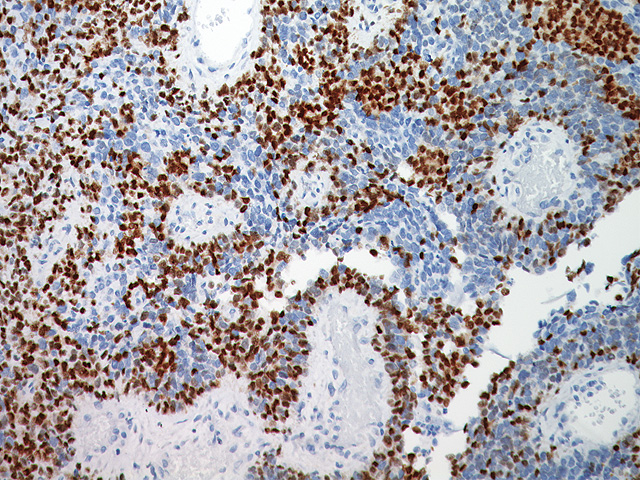
The Ki-67 nuclear antigen is associated with cell proliferation. It is found throughout the cell cycle in the G1, S, G2, and M phases; but not the (GO) phase. It is used to grade proliferation rates of tumors. The high affinity and/or binding capacity of rabbit antibodies provide superior staining results and less chance for […]
Glutamine Synthetase (GS) catalyzes the synthesis of glutamine, which is the major energy source of tumor cells.16 Accumulation of GS was first found through analyzing increased ubiquitinated protein in hepatocellular carcinoma (HCC) and its stepwise increase in expression from precancerous lesions to early advanced HCC. Liver biopsy for HCC detection is largely restricted to small […]