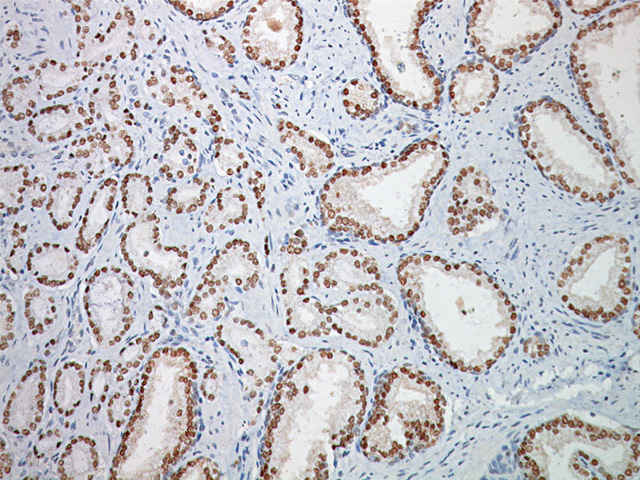
p53 acts both as a tumor-suppressor and transcription factor. Activation by DNA damage or other stress signals triggers cell-cycle arrest, apoptosis and DNA repair. The nuclear p53 gene is located on chromosome 17p, a frequent site of allele loss in many tumors (60%) including breast, colon and lung. This antibody recognizes both wild-type and mutant […]
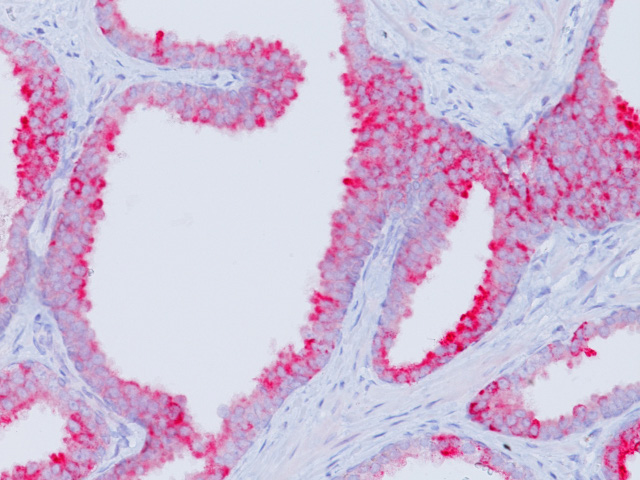
P504S, 3X is being discontinued. We will continue to offer these products until 06/30/16 or until current inventory is depleted, whichever occurs first. Biocare does offer P504S (P) or P504S, 2X, catalog numbers ACA200, APA200, AVA200, IPA200 or PP365, IP365 as a substitute. P504S, also known as β-methylacyl coenzyme A racemase (AMACR), is a peroxisomal […]
P504S, also known as α-methylacyl coenzyme A racemase (AMACR), is a peroxisomal and mitochondrial enzyme that plays a role in bile acid synthesis and β-oxidation of branched chain fatty acids.5
Oct-3/4 [SEMGC] is a mouse monoclonal antibody that has been reported as a superb nuclear marker of classical seminoma and embryonal carcinoma. Oct-3/4 antibody has excellent sensitivity and specificity for these two tumors and can be effectively used as an aid to screen for these neoplasms when dealing with a metastatic tumor of unknown origin. […]
NKX3.1 is a protein found in humans and is encoded by the NKX3.115 gene located on chromosome 8.15 The homeodomain containing transcription factor NKX3A is a putative prostate tumor suppressor that is expressed in a largely prostate-specific and androgen-regulated manner.15,16 NKX3.1 protein has been found to be positive in the vast majority of primary prostatic […]
The Muscle Specific Actin antibody [HHF35] recognizes muscle specific alpha and gamma actin isomers. It does not react with non-muscle actin. Studies have shown that it recognizes the alpha actin from cardiac, skeletal and smooth muscle sources. It does not react with beta or non-smooth muscle gamma actin isomers. The antibody labels leiomyoma, leiomyosarcoma, angiomyolipoma […]
Mucins are high molecular weight glycoproteins with 80% carbohydrate content and the remaining 20% consisting of a protein core. Mucin 5AC antibody (MUC5AC) is defined as a secretory-type mucin and is seen mainly in gastric foveolar cells. A study has suggested that MUC5AC expression is an early event in tumorigenesis. Another study indicates up-regulation of […]
MUC-4 (also called sialomucin complex) is a membrane-bound mucin that has been suggested to be implicated in malignant progression in humans and rats. The MUC-4 gene is expressed in various normal epithelial tissues of endodermic origin and carcinomas. In the respiratory tract, over-expression of the membrane mucin has been observed during malignant progression of mammary […]
MUC-1 is a large cell surface mucin glycoprotein expressed by most glandular and ductal epithelial cells and some hematopoietic cell lineages. MUC-1 is secreted from tumor cells. MUC-1 antibody stains cell membranes, but also the cytoplasm of most epithelial cell types. It is expressed abundantly in lactating mammary glands and over-expressed in >90% breast carcinomas […]
MOC-31, also known as Epithelial Specific Antigen/Ep-CAM, consists of two 34 and 39 kDa glycoproteins. These glycoproteins are located on the cell membrane surface and in the cytoplasm of virtually all epithelial cells with the exception of most squamous epithelia, hepatocytes, renal proximal tubular cells, gastric parietal cells and myoepithelial cells.15-18